What the Highlights Mean
🔵 Blue highlights indicate key terms and ideas retained from the previous definition
🟢 Green highlights indicate updates to the definition
New Definition of Dyslexia (2025)
“Dyslexia is a specific learning disability characterized by difficulties in word reading and/or spelling that involve accuracy, speed, or both and vary depending on the orthography. These difficulties occur along a continuum of severity and persist even with instruction that is effective for the individual’s peers. The causes of dyslexia are complex and involve combinations of genetic, neurobiological, and environmental influences that interact throughout development. Underlying difficulties with phonological and morphological processing are common but not universal, and early oral language weaknesses often foreshadow literacy challenges. Secondary consequences include reading comprehension problems and reduced reading and writing experience that can impede growth in language, knowledge, written expression, and overall academic achievement. Psychological well-being and employment opportunities also may be affected. Although identification and targeted instruction are important at any age, language and literacy support before and during the early years of education is particularly effective.”
Key Updates
Orthography
Accounts for a variety of languages and the complexity of their writing system.
Continuum of Severity
Offers a more nuanced and individualized outlook on the disability.
Complex Causes
Recognizes more factors involved in the cause of dyslexia.
Processing Difficulties
Includes morphology alongside phonology as a processing challenge associated with dyslexia, but excludes the previous reference to “other cognitive abilities.”
Secondary Consequences
Includes impacts on psychological well-being and employment.
Window of Support
Emphasizes the importance of early language and literacy support during the early years of education.
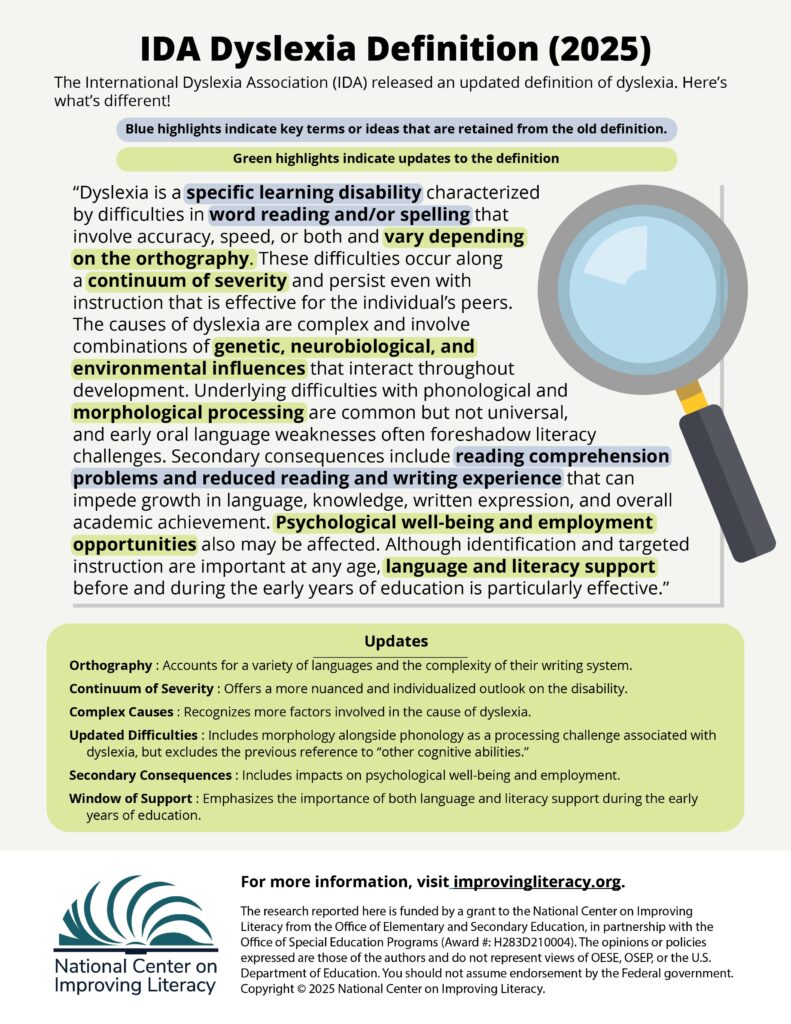
Use this infographic to inform conversations about screening, assessment, instruction, and supports that reflect current evidence. For additional background, research references, and practical resources for educators and families, visit the IDA Dyslexia Definition Project and NCIL.