Using student data effectively is an important part of improving instruction and supporting student learning. Rather than collecting data for compliance purposes alone, schools are increasingly using multiple sources of information to identify student needs, evaluate instruction, and make informed decisions about how to improve learning outcomes over time.
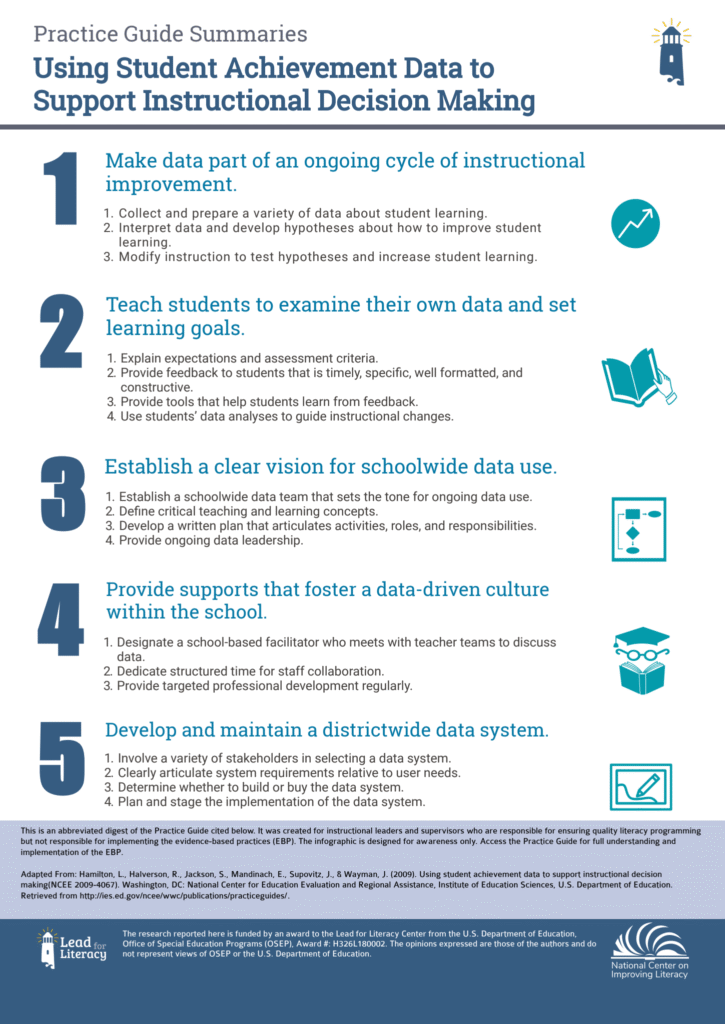
An important part of this process is regularly collecting and reviewing student performance data. Educators can use assessment results, classroom observations, progress monitoring, and other sources of information to identify patterns in student learning and guide instructional decisions. Schools are encouraged to test instructional changes based on data and continue refining supports over time, helping create more responsive instruction within both core and intervention settings.
Students also benefit from being involved in the data process. When students understand learning goals, assessment expectations, and feedback related to their progress, they are better able to reflect on their performance and take a more active role in their learning. Timely and specific feedback can help students recognize strengths, identify areas for growth, and build greater ownership of their progress.
Effective data use also depends on establishing a schoolwide vision for instructional improvement. Many schools create data teams, define shared instructional goals, and develop structured systems for reviewing and discussing student performance across grade levels and instructional teams. Clear communication and ongoing leadership support help ensure that data practices remain consistent throughout the school.
Collaboration and professional development are also important components of a strong data-driven culture. Schools should provide dedicated time for educators to review data together, discuss instructional strategies, and plan appropriate supports for students. Coaching and ongoing training related to assessment and instructional decision making can help staff feel more confident using data to guide instruction.
In addition, districtwide data systems can improve access to student information and support more efficient instructional planning. Well-designed systems make it easier for educators to organize, review, and apply student data in meaningful ways.
Overall, effective data use involves more than simply collecting information. It requires collaboration, strong instructional systems, and an ongoing focus on using data to improve teaching and support better outcomes for students.