
Universal screening plays an important role in helping schools identify students who may be at risk for reading difficulties as early as possible. Rather than waiting until students struggle significantly, educators can use brief, reliable assessments to determine which children may need additional instruction or intervention. Curriculum-based measurement (CBM) has become one of the most widely used approaches for this purpose because it provides a quick snapshot of important early literacy skills while requiring relatively little instructional time.
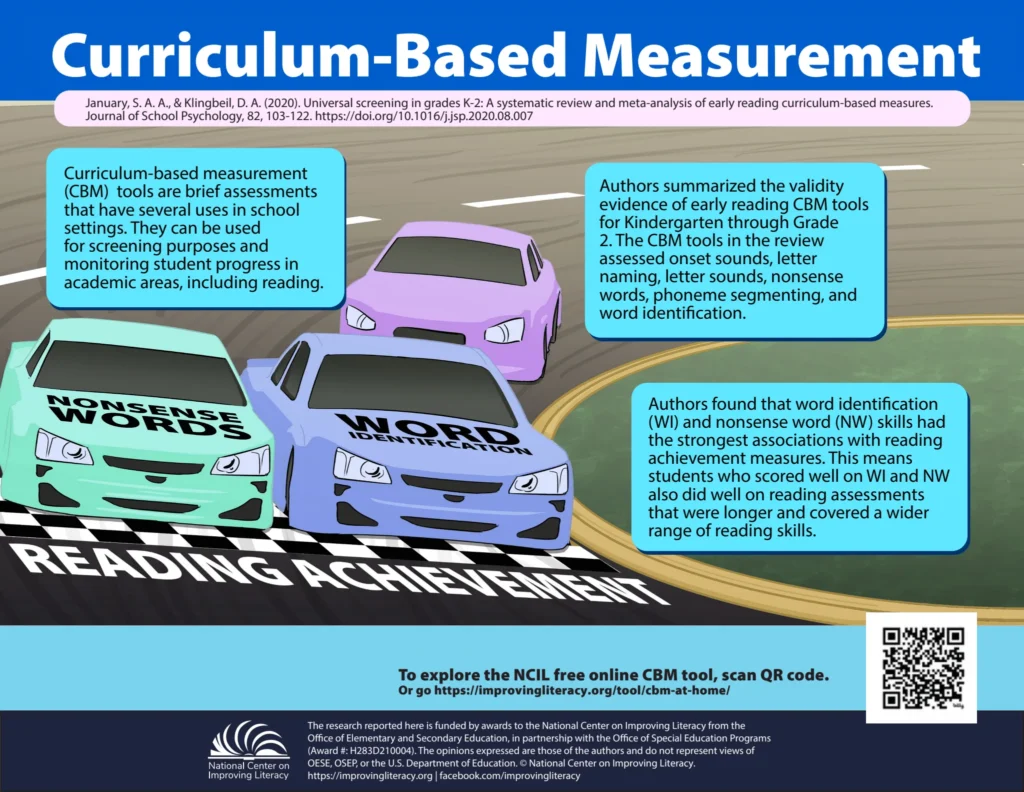
In this systematic review and meta-analysis, researchers examined decades of research on early reading CBM tools used with students in kindergarten through second grade. Instead of evaluating a single assessment, the study combined findings from many previous studies to better understand which types of CBM measures provide the strongest indication of future reading success. The researchers analyzed assessments targeting foundational reading skills such as letter naming, letter-sound knowledge, phonological awareness, decoding, and word reading. By bringing together evidence across many studies, they were able to identify patterns that individual studies alone might not reveal.
One of the study’s most important findings is that not all screening measures are equally effective at predicting overall reading achievement. Among the skills examined, assessments of word identification and nonsense word reading consistently showed the strongest relationships with later reading performance. These tasks measure a student’s ability to recognize real words and apply decoding skills to unfamiliar letter patterns, both of which are fundamental to becoming a successful reader. Because these measures closely reflect the skills students rely on when reading connected text, they provide educators with valuable information about which students may benefit from additional support.
The findings also reinforce the importance of using evidence-based screening tools rather than relying on informal observations or a single classroom assignment. Effective universal screening helps schools make informed instructional decisions, allocate intervention resources efficiently, and monitor student progress over time. When educators use screening measures with strong evidence of validity, they can be more confident that the students identified for additional support are those who are most likely to benefit from early intervention.
Ultimately, this research highlights the value of selecting screening tools that accurately reflect the foundational skills needed for reading development. By identifying students who need extra support early in their educational journey, schools can provide timely instruction that helps prevent small reading difficulties from becoming larger academic challenges. Strong screening practices are one of the first steps in building a comprehensive system of reading support that promotes success for all students.