
Many schools face the challenge of determining how best to support students with severe reading difficulties. This study explored whether a targeted Tier 2 reading intervention in an RTI (Response-To-Intervention) framework could accelerate reading growth for these students and how that growth compared with two other groups: typically achieving students receiving core classroom instruction and students receiving special education services. Rather than focusing only on where students started, the researchers examined how much progress each group made over the course of the school year.
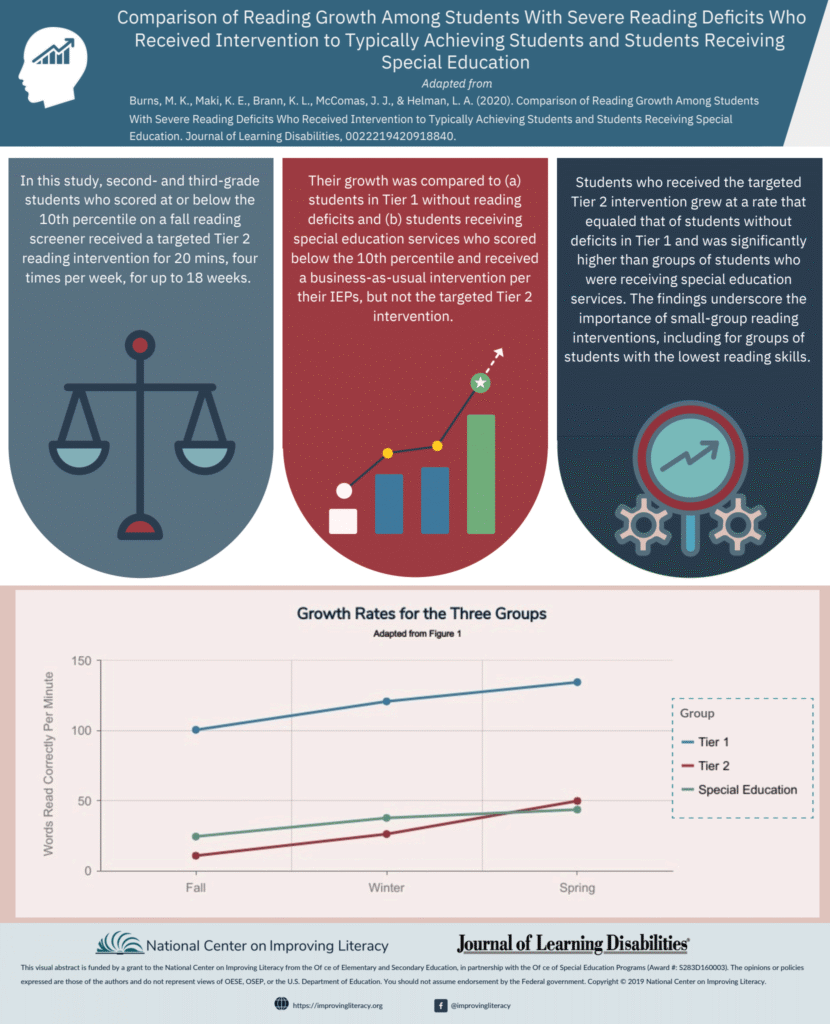
The study followed second- and third-grade students who scored at or below the 10th percentile on a fall reading screener. These students participated in a structured Tier 2 intervention delivered in small groups for 20 minutes, four times each week, over a period of up to 18 weeks. Their progress was then compared with students who did not have reading deficits as well as students receiving special education services who continued with the instructional supports outlined in their IEP (Individualized Education Programs).
One of the most important findings was that students receiving the targeted Tier 2 intervention improved at a rate similar to students who began the year without reading difficulties. Although the intervention group started well behind their peers, they demonstrated strong reading growth throughout the study. In contrast, students receiving business-as-usual special education services showed slower rates of improvement. These results suggest that well-designed, evidence-based interventions can substantially increase the rate at which students with significant reading challenges develop essential reading skills.
The findings reinforce the value of providing intensive instruction early and systematically. Small-group interventions give educators an opportunity to deliver explicit, focused instruction that responds to students’ specific needs while allowing them to receive frequent practice and feedback. The study also highlights that meaningful growth is possible even for students with the most severe reading deficits when they receive the right type of instructional support.
For educators, the research offers an encouraging message: students with significant reading challenges are capable of making strong progress when interventions are targeted, consistent, and grounded in evidence. Rather than assuming that severe reading difficulties inevitably lead to slower growth, the study demonstrates that high-quality intervention can help students make gains that closely mirror those of their typically achieving classmates. These findings support the continued use of structured, small-group reading interventions as an important part of a comprehensive system of reading instruction.