
Self-advocacy is about understanding who you are, knowing what helps you succeed, and confidently communicating your needs. This resource introduces these concepts in a simple, encouraging way, helping students see themselves as active participants in their education rather than passive recipients of support.
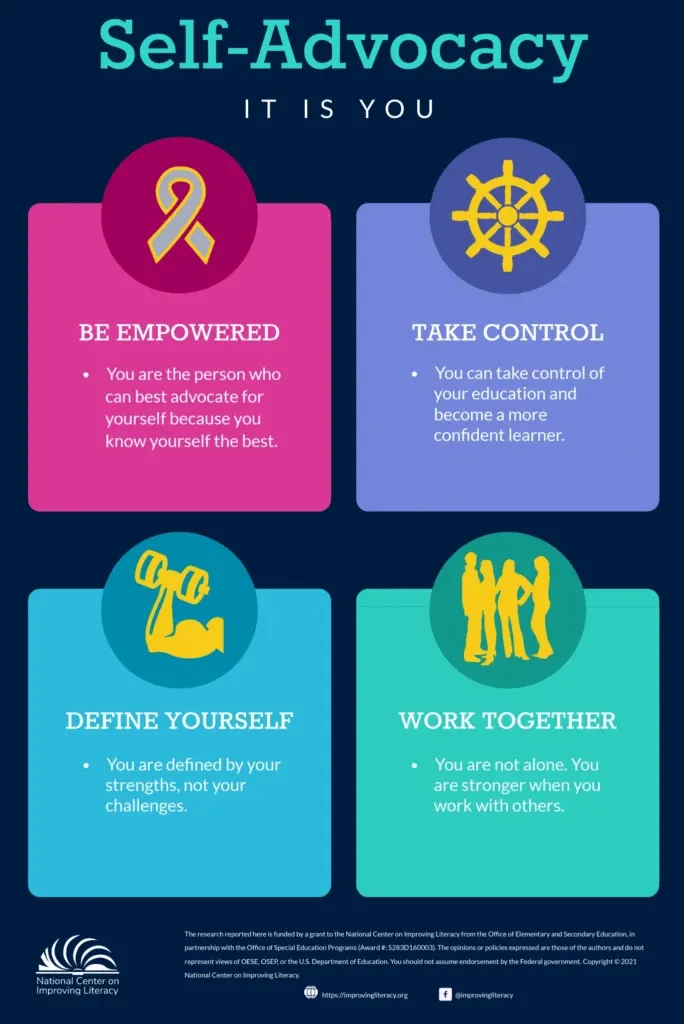
The resource is organized around four key principles: Be Empowered, Take Control, Define Yourself, and Work Together. Together, these ideas help students build the confidence and skills needed to advocate for themselves in school and in everyday life.
The first principle, Be Empowered, encourages students to learn about themselves—their strengths, challenges, interests, and learning preferences. The better students understand how they learn, the more effectively they can explain what supports their success. Self-awareness is the foundation of self-advocacy and helps students communicate more confidently with teachers, family members, and peers.
Take Control focuses on helping students become active participants in their education. Rather than waiting for others to make decisions, students are encouraged to ask questions, set goals, make informed choices, and take responsibility for their learning. Developing these habits fosters independence and prepares students to navigate future educational and career opportunities.
The resource also emphasizes Define Yourself, reminding students that they are much more than a disability, learning difference, or academic challenge. Every student has unique strengths, talents, interests, and aspirations that deserve recognition. Viewing themselves through a strengths-based lens helps students build confidence and develop a positive sense of identity.
Finally, Work Together reinforces that self-advocacy is not something students do alone. Effective self-advocacy often involves collaborating with teachers, family members, specialists, peers, and other trusted adults. Working together allows students to share their perspectives while benefiting from the guidance and support of others.
This resource can be used in classrooms, family discussions, student support meetings, transition planning, or individual learning activities. It provides an accessible introduction to self-advocacy while encouraging meaningful conversations about communication, confidence, and personal responsibility. By helping students recognize that their voice matters and that asking for support is a sign of strength, it encourages learners to become confident, active partners in their education and future success.