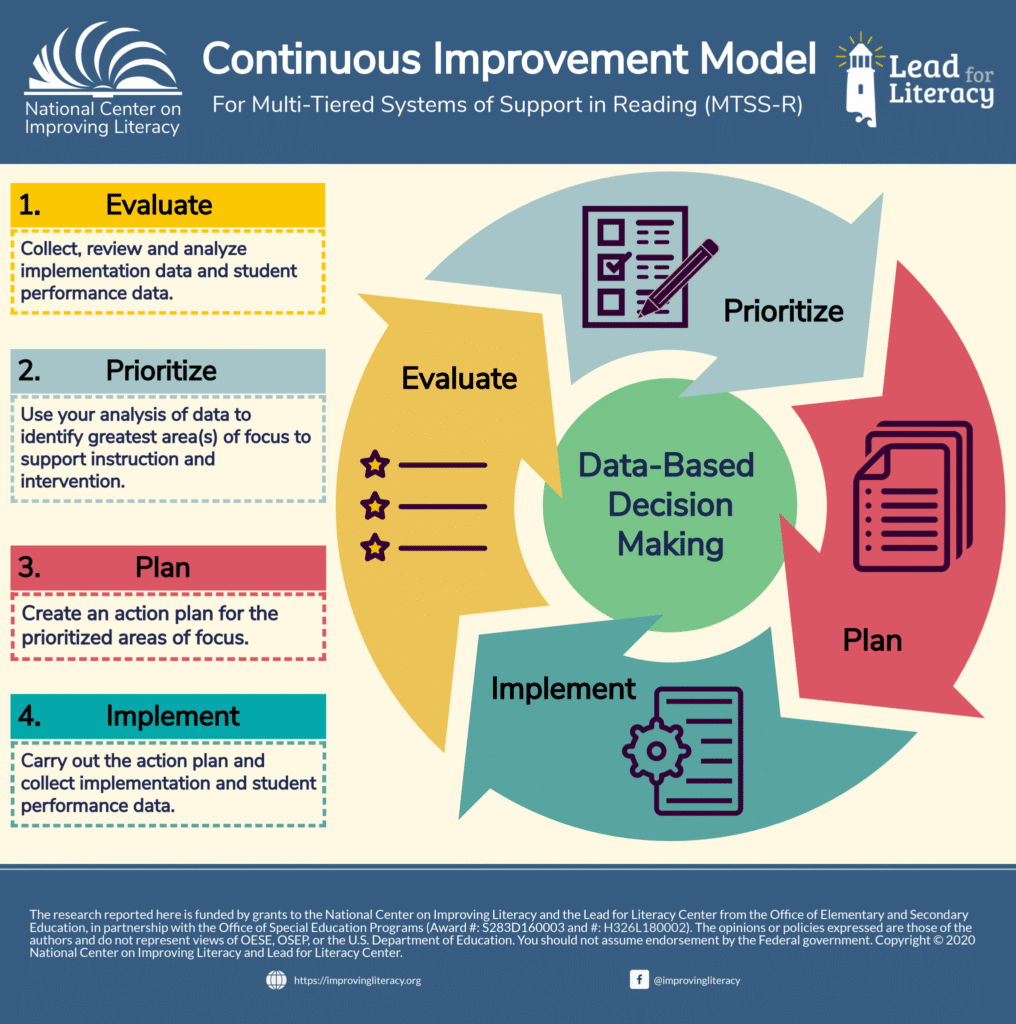

The Continuous Improvement Model serves as a vital framework for school leadership teams aiming to optimize their Multi-Tiered Systems of Support in Reading (MTSS-R). Sustaining an effective literacy initiative requires more than just adopting a curriculum; it demands a structured, iterative cycle centered around data-based decision making. This cyclic model ensures that instructional strategies and intervention programs are dynamic, responsive, and closely aligned with actual student and schoolwide needs.
The first phase of the model is Evaluate, which establishes the foundation for all subsequent actions. During this stage, educational teams systematically collect, review, and analyze both implementation data and student performance data. Gathering implementation data allows schools to measure whether reading practices are being delivered as intended, while student performance data highlights clear patterns of academic growth or persistent skill deficits.
Once data are thoroughly evaluated, teams transition to the second phase: Prioritize. Rather than attempting to tackle every instructional challenge simultaneously, educators utilize their data analysis to isolate the greatest area or areas of focus needed to support core instruction and targeted interventions. Prioritizing ensures that school resources, professional development, and instructional adjustments are directed where they will yield the most significant impact on student literacy.
With a clear, data-justified focus established, the third phase requires teams to Plan. In this stage, stakeholders collaborate to create a comprehensive action plan specifically tailored to the prioritized areas of focus. This plan outlines explicit evidence-based strategies, assigns responsibilities, establishes realistic timelines, and defines the specific metrics that will be used to determine the initiative’s eventual success.
The final phase of the cycle is Implement, where the compiled strategy is put into active motion. Educators carry out the documented action plan within their classrooms and intervention blocks. Crucially, as implementation progresses, teams continuously collect fresh implementation and student performance data. This data collection feeds seamlessly back into the first stage of the model, starting the continuous improvement loop anew and allowing schools to adjust their practices in real time to ensure long-term literacy growth.