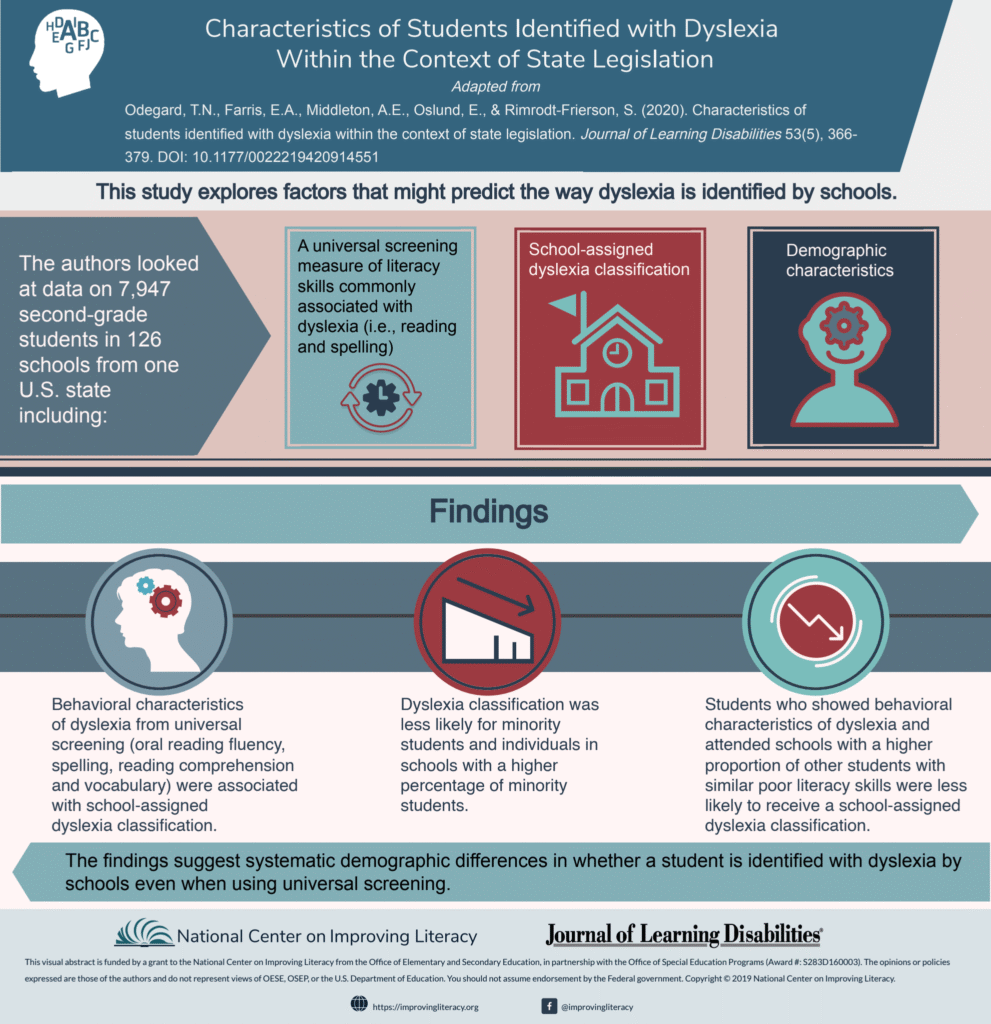

As states across the country have adopted dyslexia legislation, schools have expanded efforts to identify students who may be experiencing reading difficulties. The study “Characteristics of Students Identified With Dyslexia Within the Context of State Legislation” explored how students are identified with dyslexia in real-world school settings and whether certain factors make identification more or less likely. Using data from nearly 8,000 second-grade students across 126 schools, researchers examined literacy screening results, school-assigned dyslexia classifications, and demographic information to better understand the patterns behind identification decisions.
The findings confirmed that students who demonstrated characteristics commonly associated with dyslexia were more likely to receive a dyslexia classification. Measures such as oral reading fluency, spelling, reading comprehension, and vocabulary were all related to identification. This suggests that schools are generally using information about students’ reading performance when making decisions about dyslexia classification. In other words, the students most likely to be identified tended to be those who showed the strongest indicators of reading difficulty on universal screening measures.
However, the study also found that literacy performance was not the only factor associated with identification. Researchers observed differences related to student demographics and school context. Minority students were less likely to receive a dyslexia classification, even when literacy screening results indicated characteristics associated with dyslexia. Similarly, students attending schools with larger percentages of minority students were identified less often than students in other schools. These findings suggest that the process of identifying dyslexia may vary across settings and populations.
Another important finding involved the concentration of struggling readers within a school. Students who showed signs of dyslexia but attended schools with a higher proportion of peers who also demonstrated weak literacy skills were less likely to receive a dyslexia classification. This pattern suggests that when reading difficulties are more common within a school, individual students may be less likely to stand out as needing specialized identification.
Taken together, the research highlights the importance of looking beyond screening scores alone when evaluating dyslexia identification practices. While universal screening can help schools recognize students who may need support, the study suggests that demographic and contextual factors may influence which students are ultimately identified. These findings underscore the need for equitable identification systems that ensure all students with characteristics of dyslexia have access to appropriate evaluation and support, regardless of their background or the school they attend.