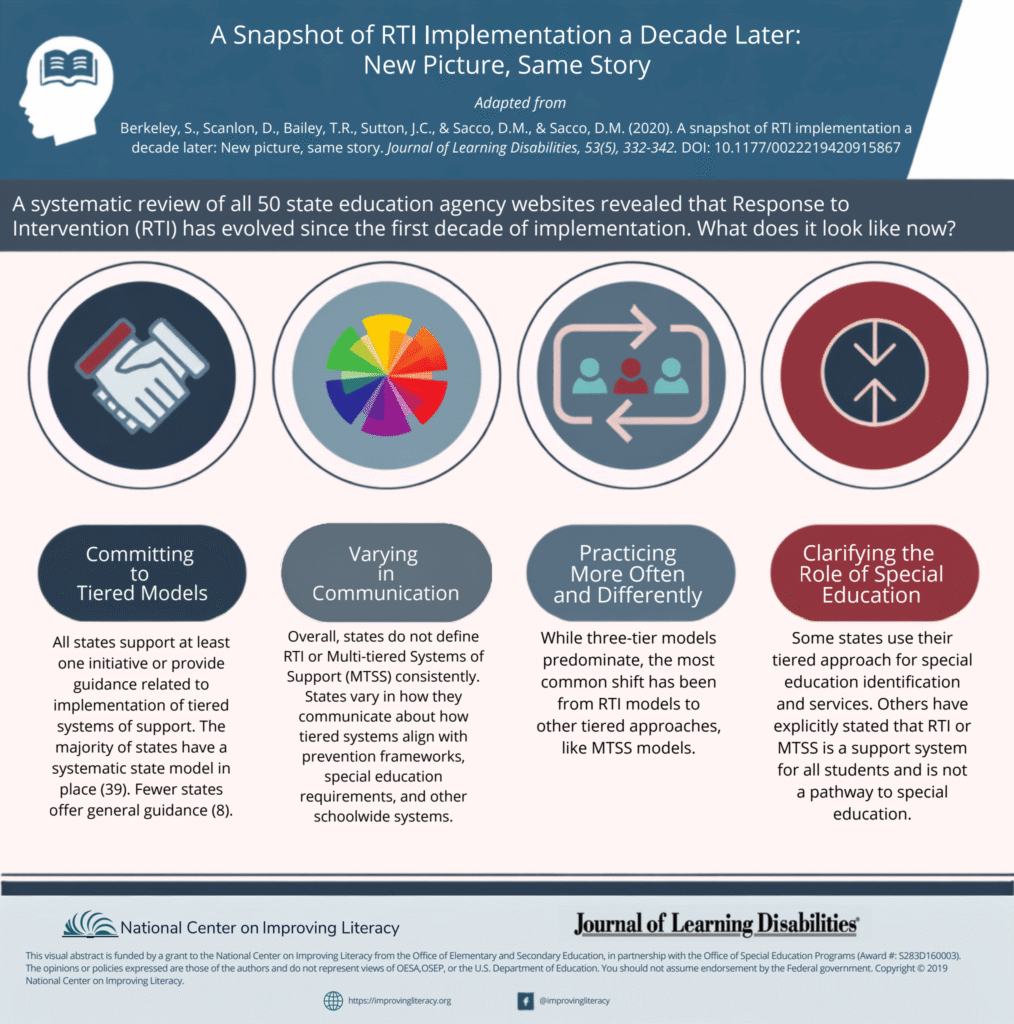

Schools work hard to meet the needs of every student. In a single classroom, students may be at very different levels in reading, math, and behavior. Some students need extra help right away, while others are ready for more challenge. This is why many schools use Multi-Tiered Systems of Supports (MTSS), a framework that integrates Response to Intervention (RTI) with data-driven, tiered reading intervention. These systems are designed to provide the right support at the right time using data-driven instruction and tiered interventions.
Over the past decade, RTI has become a common part of school practice across the country. Schools are using universal screening, progress monitoring, and evidence-based interventions to guide their decisions. However, putting these systems into practice is not always simple. Schools must decide how to organize support, how to use data, and how to clearly communicate their approach to teachers and families.
RTI and MTSS have changed over time, but many challenges remain. Different states and schools may define and use these systems in different ways. This can make it harder for educators to share ideas, compare results, and ensure that all students receive consistent support. Even when schools are committed to strong systems, the details of implementation can vary widely.
One important idea behind RTI and MTSS is prevention. Instead of waiting for a student to fall far behind, schools aim to identify needs early and provide support right away. This approach relies on strong classroom instruction for all students, along with additional layers of help for those who need it. When done well, this system can improve outcomes in early literacy, reading intervention, and overall academic success.
Another key part of these systems is clarity. Teachers and school leaders need clear guidance on how to use data, when to provide extra support, and how to adjust instruction. Without clear systems, even strong tools like screening and progress monitoring may not lead to better results. Consistency across classrooms and schools helps ensure that every child receives fair and effective support.
Families also play an important role. When schools clearly explain how support systems work, families can better understand their child’s progress and stay involved in their education. This partnership helps reinforce learning both at school and at home.
In today’s schools, strong systems matter just as much as strong instruction. By improving how RTI and MTSS are used, schools can better support every student, respond to needs more quickly, and create a more effective path to learning success.