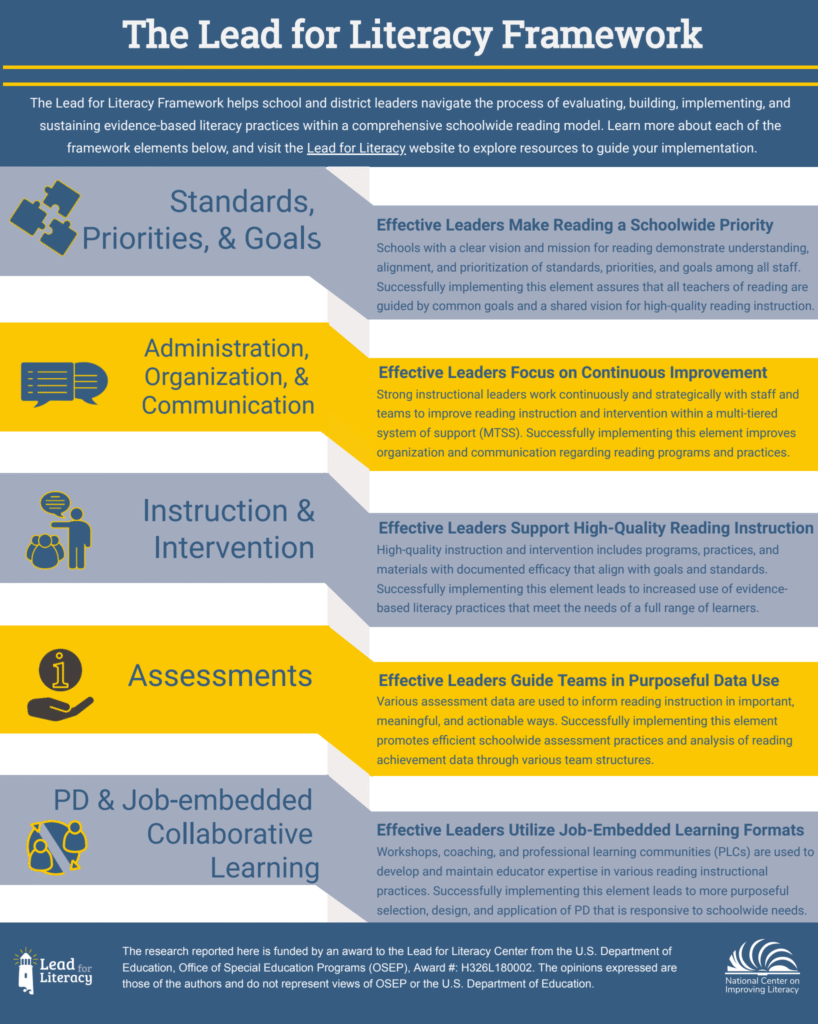

The Lead for Literacy Framework identifies several core elements that support effective schoolwide literacy implementation. The framework is intended to help leaders evaluate current practices, identify areas for growth, and build systems that support high-quality reading instruction for all students.
The first element focuses on standards, priorities, and goals. Schools are encouraged to establish a clear vision for literacy instruction that is shared across staff. When educators work toward common reading goals and understand schoolwide priorities, literacy instruction becomes more consistent and aligned across classrooms and grade levels.
Another major component of the framework is administration, organization, and communication. Effective literacy leaders use systems and team structures to support ongoing improvement efforts. This includes coordinating reading instruction and intervention within an MTSS framework, improving communication among staff, and creating organized processes for decision making and problem solving.
The framework also emphasizes the importance of high-quality instruction and intervention. Schools should select programs, materials, and instructional practices that are supported by evidence and aligned with literacy standards and goals. Strong literacy systems include instruction that addresses the needs of a wide range of learners and provides additional support for students who require intervention.
Assessment practices are another key focus of the framework. Leaders are encouraged to help teams use assessment data in meaningful and actionable ways. Efficient assessment systems allow schools to identify student needs, monitor progress, and make informed instructional decisions that improve reading outcomes.
Finally, the framework highlights the importance of professional development and job-embedded collaborative learning. Workshops, coaching, and professional learning communities (PLCs) help educators build and maintain expertise in evidence-based literacy practices. Professional learning should be connected to schoolwide goals and responsive to staff and student needs.
Overall, the Lead for Literacy Framework emphasizes that successful literacy improvement requires more than individual classroom practices. It requires coordinated leadership, clear systems, purposeful data use, and ongoing professional learning to support high-quality reading instruction across a school or district.