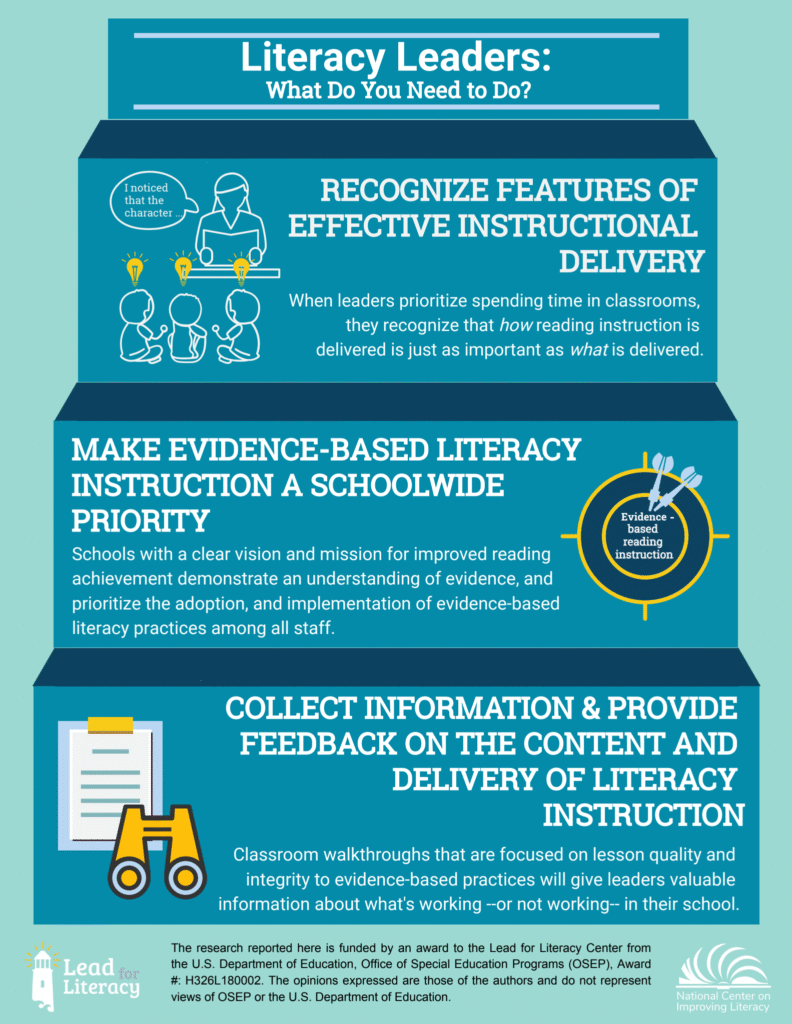

This resource highlights several important considerations for school leaders who want to make evidence-based literacy instruction a foundational priority. To achieve meaningful improvements in student reading achievement, schools must establish a clear, unified vision and mission. When leadership firmly prioritizes these goals, it fosters an environment where all staff members understand scientific evidence and intentionally implement research-supported literacy practices.
An essential component of this schoolwide priority is recognizing the features of effective instructional delivery. The resource emphasizes that true literacy leadership requires spending consistent, dedicated time inside classrooms. Through direct observation, leaders come to understand that how reading instruction is structured and executed by educators is just as critical to student success as the specific curriculum materials being delivered.
To ensure these high instructional standards are maintained across all classrooms, educational leaders must routinely collect information and provide constructive feedback on both the content and delivery of literacy instruction. Conducting focused classroom walkthroughs gives administrators valuable data regarding overall lesson quality and systemic alignment. These regular, targeted visits provide real-time indicators of instructional integrity, helping leaders pinpoint exactly what is working—and what is not working—within their school’s reading programs.
Ultimately, gathering this operational data enables leaders to offer actionable feedback to educators, establishing a continuous cycle of instructional improvement. By systematically evaluating classroom practices and promoting an environment centered on research-supported methods, literacy leaders can ensure that high-quality, impactful instruction happens consistently across all classrooms and intervention settings.