
Effective literacy support involves providing instruction that becomes increasingly targeted and responsive as student needs change. Strengthening instructional intensity across a multi-tiered system of support (MTSS) helps schools provide students with meaningful opportunities to build reading skills while maintaining access to strong core instruction.
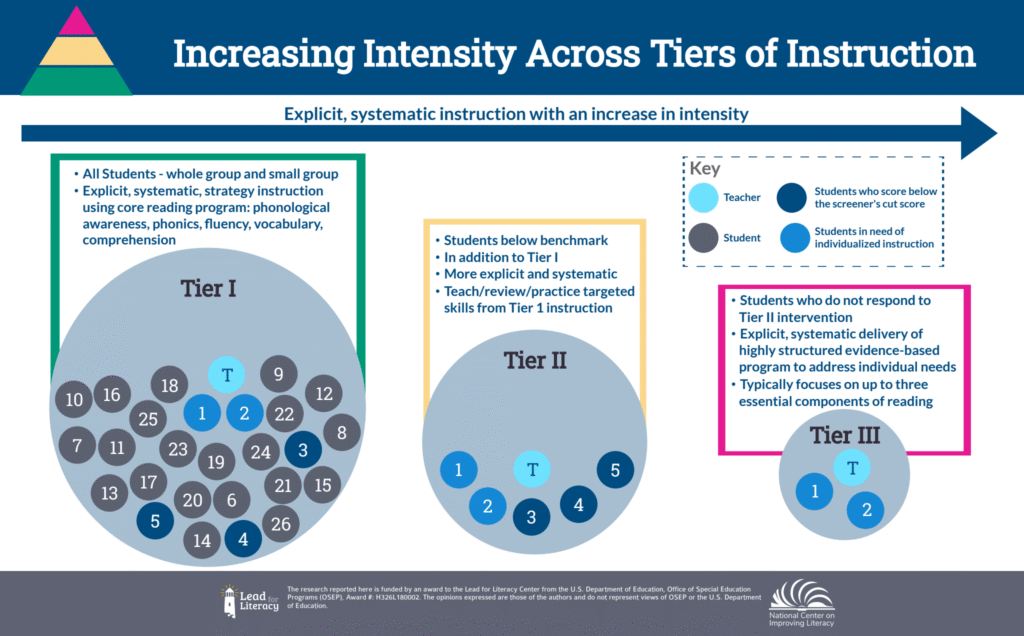
At the foundation of MTSS is Tier I, where all students receive grade-level literacy instruction focused on essential reading components such as phonological awareness, phonics, fluency, vocabulary, and comprehension. Effective Tier I instruction includes a combination of whole-group and small-group learning opportunities, along with explicit, systematic instruction that supports a range of student needs. Opportunities for targeted practice and small-group support allow educators to respond proactively as students develop literacy skills.
As students require additional support, Tier II intervention provides more focused instruction in smaller groups, allowing educators to reinforce and practice critical reading skills. Supplemental intervention is in addition to Tier I instruction and is designed to strengthen and extend learning through additional opportunities for modeling, guided practice, and feedback. Instructional intensity is strengthened in Tier II through purposeful instructional design and targeted learning experiences.
For students with the most persistent reading difficulties, Tier III instruction provides highly individualized, evidence-based support tailored to specific learning needs. Instruction at this level becomes increasingly concentrated, often narrowing the focus to a small number of essential reading skills while using ongoing data to guide instructional decisions. As students are supported across tiers, there is consistent emphasis on responsiveness, precision, and adaptability as key elements of effective intervention. Connecting research-based practices with practical instructional guidance helps educators and leaders build a clearer understanding of what it means to intensify literacy support across the tiers. The discussion moves beyond intervention programs alone to highlight how instructional design, delivery, and responsiveness work together to provide increasingly targeted support that helps more students become confident, successful readers.