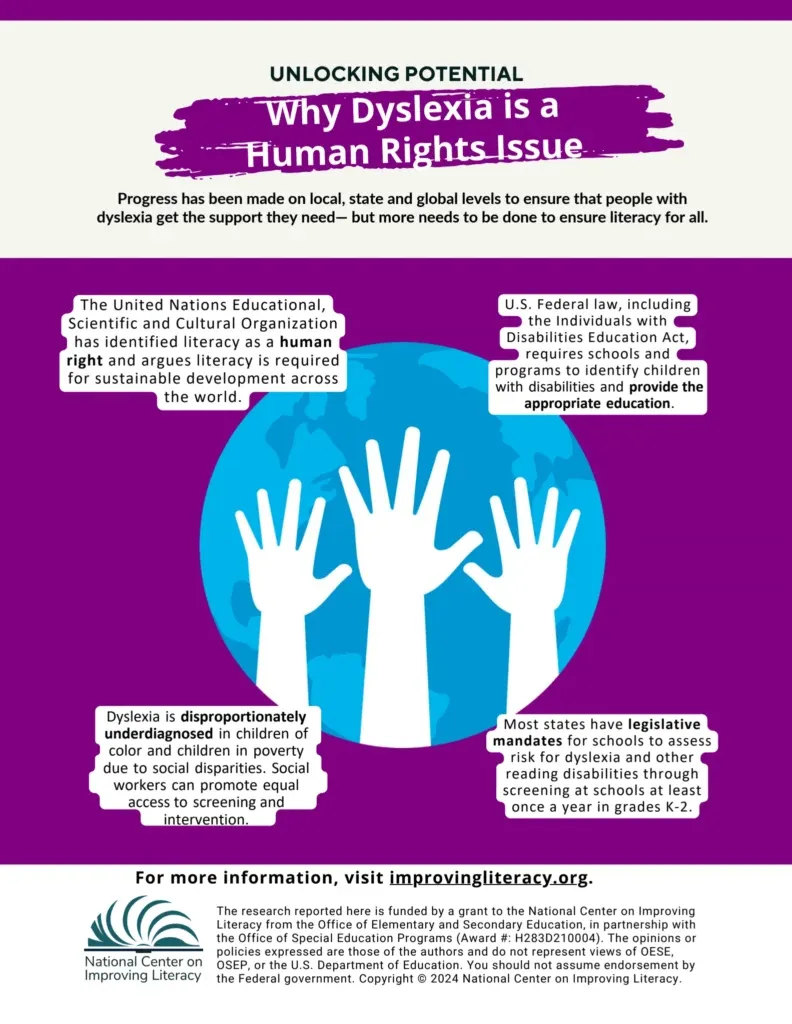

Literacy opens doors to education, employment, civic participation, and lifelong learning. When students struggle to read because of dyslexia and do not receive the support they need, the effects often extend far beyond the classroom. Access to literacy is closely tied to basic educational rights, and providing effective reading support is an important step toward ensuring every learner has the opportunity to succeed.
Over the past several decades, awareness of dyslexia has grown considerably. Researchers, educators, policymakers, and advocacy organizations have worked together to improve understanding of how dyslexia affects reading development and how early identification can lead to better outcomes. These efforts have contributed to stronger screening practices, expanded educator training, and increased public awareness. While these advances represent meaningful progress, important challenges remain before all students have equal access to the services they need.
One of the central themes of the resource is equal access to education. Not all children have the same opportunity to be identified and supported, even when they demonstrate similar reading difficulties. Factors such as poverty, limited access to resources, and systemic disparities can make it more difficult for some students to receive timely evaluation and intervention. As a result, many children who could benefit from specialized reading instruction may not receive appropriate support until years after they begin struggling. Reducing these barriers is an essential part of creating fair and inclusive educational systems.
Dyslexia should also be understood within the broader context of educational policy and legal protections. Federal laws require schools to identify and serve students with disabilities, while many states have adopted legislation that promotes universal screening for reading difficulties in the early elementary grades. These policies reflect a growing recognition that identifying reading challenges early gives educators the best opportunity to provide targeted instruction before students experience prolonged academic difficulties.
Ultimately, dyslexia needs to be viewed through both an educational and social lens. Supporting students with dyslexia is not simply about improving reading achievement. It is about expanding access to learning, increasing educational opportunity, and helping ensure that every child has the chance to develop the literacy skills needed for school, work, and participation in society. Continued collaboration among educators, families, policymakers, and community organizations will be essential for making this goal a reality.