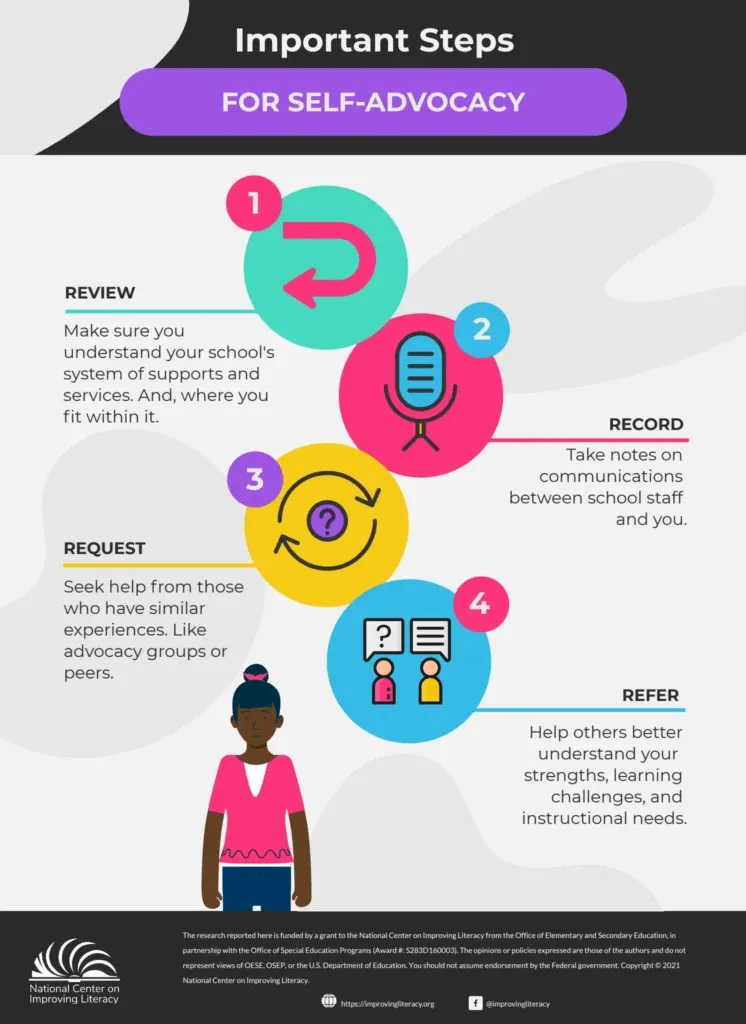

Understanding how a school’s system of supports and services works is an important part of effective self advocacy. The first step, Review, encourages students and families to learn how support is provided and where they fit within that system. When individuals know what resources are available, they are better prepared to ask informed questions, understand their options, and identify appropriate next steps.
The second step, Record, focuses on keeping track of important information. Taking notes during conversations with teachers, specialists, and other school staff creates a helpful record of decisions, follow up actions, concerns, and student progress. Organized documentation can make it easier to prepare for future meetings and monitor changes over time.
The third step, Request, reminds students and families that support is available. Advocacy organizations, community groups, and peers with similar experiences can provide practical guidance, answer questions, and offer encouragement throughout the process. Learning from others can help families navigate educational systems with greater confidence.
The final step, Refer, emphasizes the importance of helping educators understand the learner. Sharing information about a student’s strengths, learning challenges, and instructional needs gives school teams a clearer picture of how that student learns best. Clear communication supports more informed decisions about instruction, services, and accommodations.
This resource can serve as a starting point for students developing self advocacy skills, families preparing for school meetings, and educators introducing the principles of effective advocacy. It reinforces that self advocacy is not a single conversation, but an ongoing process of learning, documenting, seeking support, and communicating clearly to help students receive the support they need to succeed.