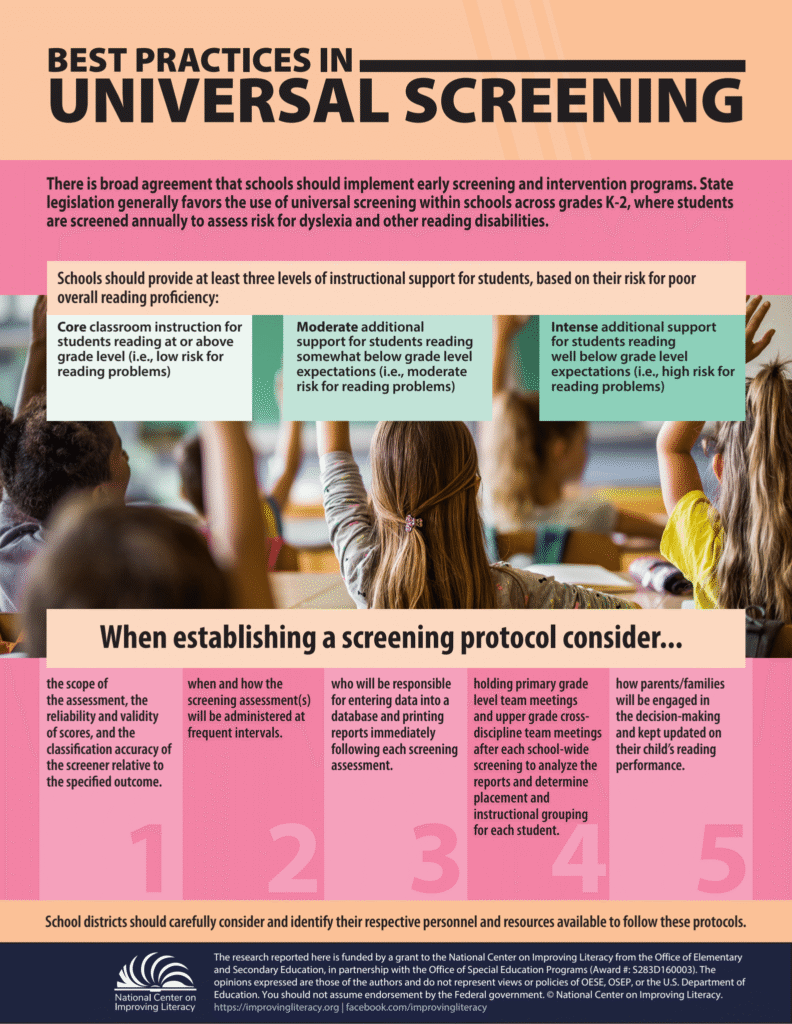

Universal screening is one of the most important components of an effective early literacy system because it allows schools to identify students who may need additional reading support as early as possible. Rather than waiting for students to experience prolonged academic struggles, schools can use screening assessments to quickly identify potential risk and respond with targeted instruction. However, successful screening is not simply about administering an assessment. It is about creating a thoughtful, schoolwide process for collecting, interpreting, and acting on student data.
An effective universal screening system begins with selecting high-quality assessments that measure the skills most closely related to future reading success for respective grade levels. Schools should ensure that the screening tools they choose are reliable, valid, and accurate at identifying students who are likely to experience reading difficulties. Just as important, schools need a clear plan for when screenings will occur and how often they will be administered so that student progress can be monitored over time.
Building systems that support the use of screening data is another important step in the screening process. This includes identifying staff members who are responsible for entering assessment results, generating reports, and ensuring that information is available quickly enough to guide instructional decisions. Regular team meetings provide opportunities for educators to review screening results together, identify patterns across classrooms and grade levels, and determine the most appropriate instructional placements for individual students. These collaborative discussions help ensure that decisions are based on evidence rather than assumptions.
Additionally, universal screening should lead directly to differentiated instruction. Students who are meeting grade-level expectations continue to receive strong core classroom instruction, while students identified as being at moderate or high risk receive increasingly intensive levels of support. This tiered approach allows schools to allocate instructional resources efficiently while ensuring that students receive intervention matched to their individual needs.
Finally, the infographic underscores that families are an essential part of the screening process. Keeping parents and caregivers informed about their child’s reading performance helps foster trust between the home and school and allows families to better understand the purpose of screening and the support their child may receive. Successful implementation also depends on thoughtful planning at the district and school levels, including ensuring that personnel, resources, and procedures are in place before screening begins. When these elements work together, universal screening becomes a foundation for early identification, timely intervention, and improved reading outcomes for all students.