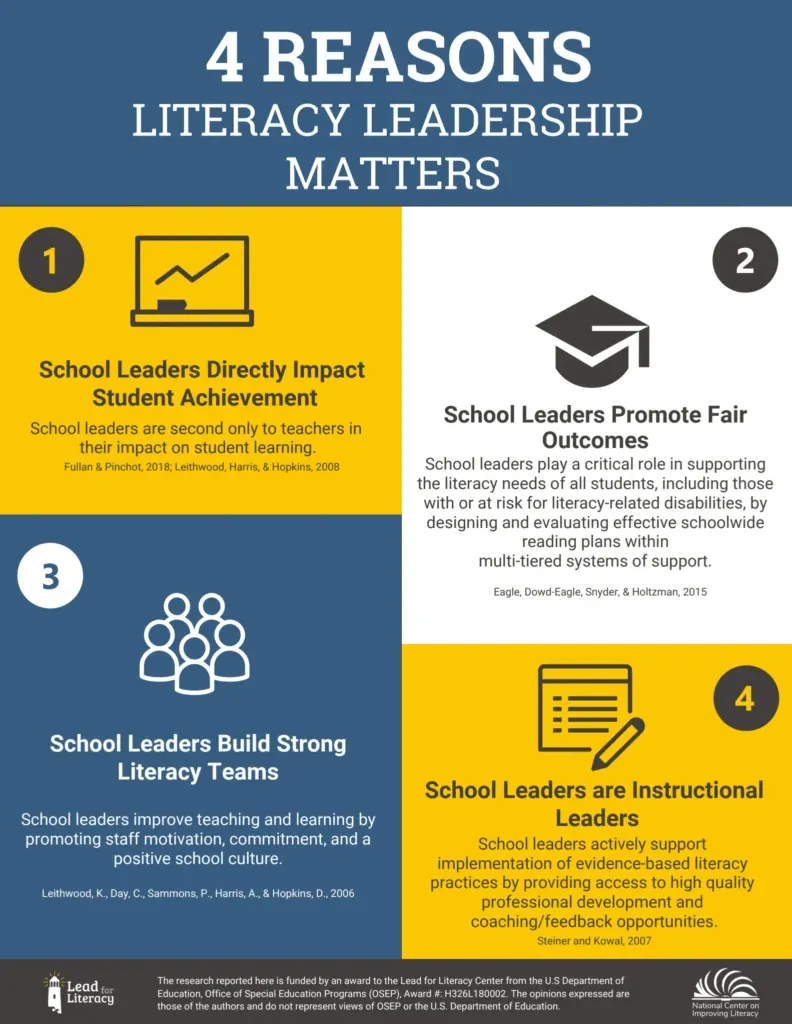

Effective school leadership serves as a primary driver of educational excellence, holding an impact on student learning that is second only to classroom teaching. Leaders shape the academic environment by establishing expectations, aligning institutional goals, and creating organizational structures that enable both educators and students to thrive. When administrators make literacy a dedicated schoolwide priority, their systematic decisions cultivate an environment where evidence-based practices flourish and student achievement significantly improves.
A core responsibility of modern literacy leadership is the promotion of fair outcomes across all student populations. School leaders play a vital role in supporting the unique needs of every learner, including those who have or are at risk for literacy-related disabilities. By designing, managing, and evaluating comprehensive schoolwide reading plans within Multi-Tiered Systems of Support (MTSS), leaders establish systemic safety nets. This structured oversight guarantees that targeted, data-informed interventions are distributed equitably, ensuring that struggling readers receive timely and appropriate instruction.
Furthermore, successful literacy initiatives depend heavily on a leader’s capacity to build and sustain strong, collaborative instructional teams. Leaders enhance teaching and learning environments by actively boosting staff motivation, strengthening professional commitment, and nurturing a positive school culture. When teachers feel supported in a collaborative climate, they are more likely to participate in shared professional growth, coordinate instructional strategies across grade levels, and collectively accept accountability for student literacy goals.
Finally, effective administrators function as active instructional leaders rather than detached managers. They support the direct classroom implementation of evidence-based literacy practices by ensuring teachers have regular access to high-quality professional development, job-embedded coaching, and constructive feedback loops. Through ongoing classroom observations and structured feedback, instructional leaders help teachers refine their delivery, monitor implementation fidelity, and maintain high standards of literacy instruction across every classroom.