
In many classrooms, teachers work hard to support students through reading intervention and data-driven instruction. Systems like Response to Intervention (RTI) and Multi-Tiered System of Supports (MTSS) are designed to provide help based on student need. These systems rely on high-quality data to decide which students need more support and what kind of instruction will help them most. One of the most important pieces of that data is how well a student can read words.
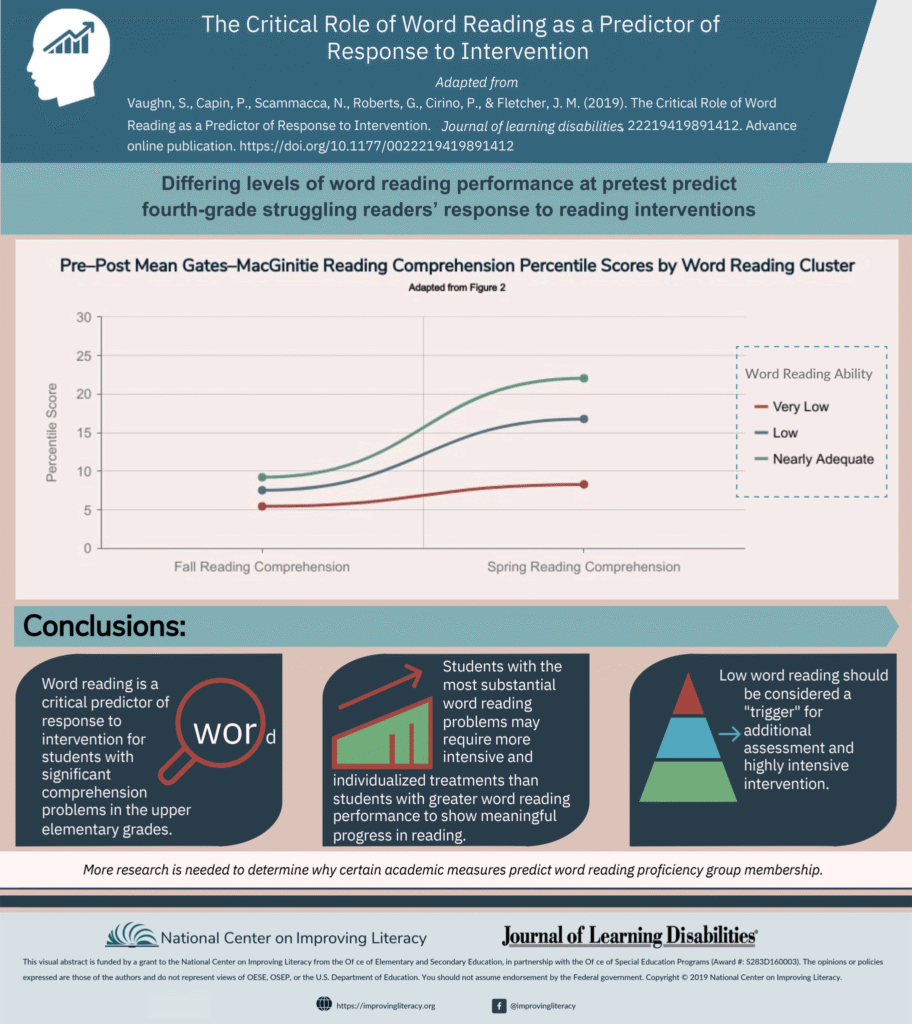
A 2020 study in the Journal of Learning Disabilities by Vaughn, Capin, Scammacca, and colleagues found that word reading ability is a strong predictor of how students respond to reading intervention, especially in the upper elementary grades. This means that students who struggle with word reading often need more targeted and intensive support to make progress. It also means that early signs of difficulty in word reading should not be ignored. Instead, they can act as an early warning signal that a child may need additional help.
Focusing on foundational reading skills such as phonics, decoding, and word recognition can make a big difference. These skills are the building blocks for reading fluency and comprehension. When students develop strong word reading skills early, they are better prepared to understand complex texts later on.
It is also important for schools to act quickly. When a student shows signs of difficulty, timely reading assessment and progress monitoring can help guide instruction. The goal is not just to identify a problem, but to respond with the right level of support. Some students may benefit from small-group instruction, while others may need more intensive, individualized intervention.
Families are important partners in this process. When families understand how word reading affects overall reading success, they can support practice at home and stay involved in their child’s progress.
In today’s schools, strong reading outcomes depend on early action, clear data, and effective instruction. By paying close attention to word reading skills and responding with purpose, educators can better support every student and help build a strong foundation for lifelong reading success.