
This is especially true for students with or at risk for dyslexia, who may need more support to build strong reading skills. That is why schools are focusing on early literacy intervention, evidence-based reading instruction, and data-driven decision making.
Research shows that what schools do early matters a lot. Over many years, studies have examined how to improve reading outcomes for young students. A 2023 meta-analysis in Reading Research Quarterly by Hall, Dahl-Leonard, Cho, and colleagues reviewed 40 years of reading intervention research for students in grades K–5 with or at risk for dyslexia. One clear message stood out: early action leads to stronger results. When support begins in kindergarten through second grade, students have a much better chance of catching up and staying on track.
Effective reading support is not just about starting early. It is also about focusing on the right skills. Strong readers can quickly recognize words and understand what they read. For students who struggle, targeted instruction in word reading, phonics, and foundational literacy skills can make a big difference. These skills act as building blocks for later success in reading fluency and comprehension.
Another important factor is time. Students who receive more consistent and focused instruction tend to make greater progress. This is often called intervention intensity or dosage. Schools must plan carefully to ensure that students get enough time practicing key skills, while also keeping instruction engaging and meaningful.
Successful intervention also depends on strong systems within the school. Teachers, reading specialists, and school leaders need to work together to review student data and adjust instruction. Many schools use systems like MTSS (Multi-Tiered System of Supports) or RTI (Response to Intervention) to organize this work. These systems help schools provide the right level of support based on each student’s needs.
Families play an important role as well. When families understand how their child is progressing, they can support reading at home and stay involved in their child’s learning journey. In today’s classrooms, schools need approaches that are both effective and practical. High-quality reading intervention combines early identification, focused instruction, and ongoing support. By using research-based practices and working together, schools can help every student build the reading skills they need for long-term success.
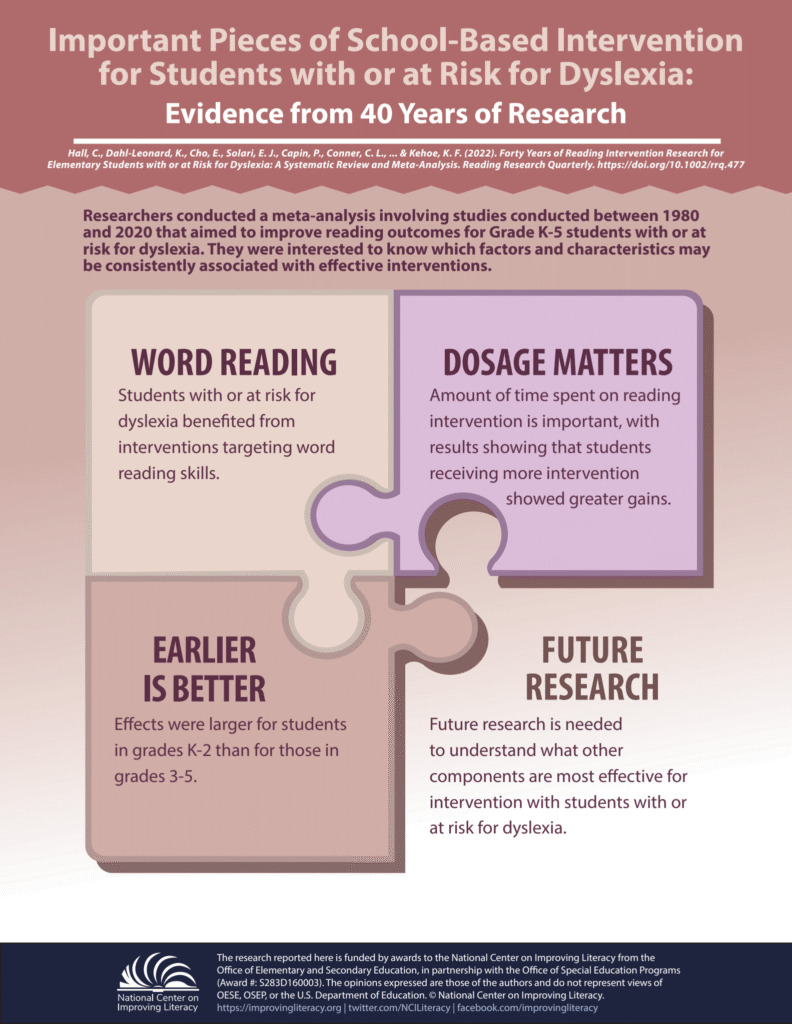
Learn more about the research behind this infographic in the related Reading the Room webinar, Evidence from 40 Years of Research: Intervention for Students With or at Risk for Dyslexia.