
Preschool Years
Age: 3-5
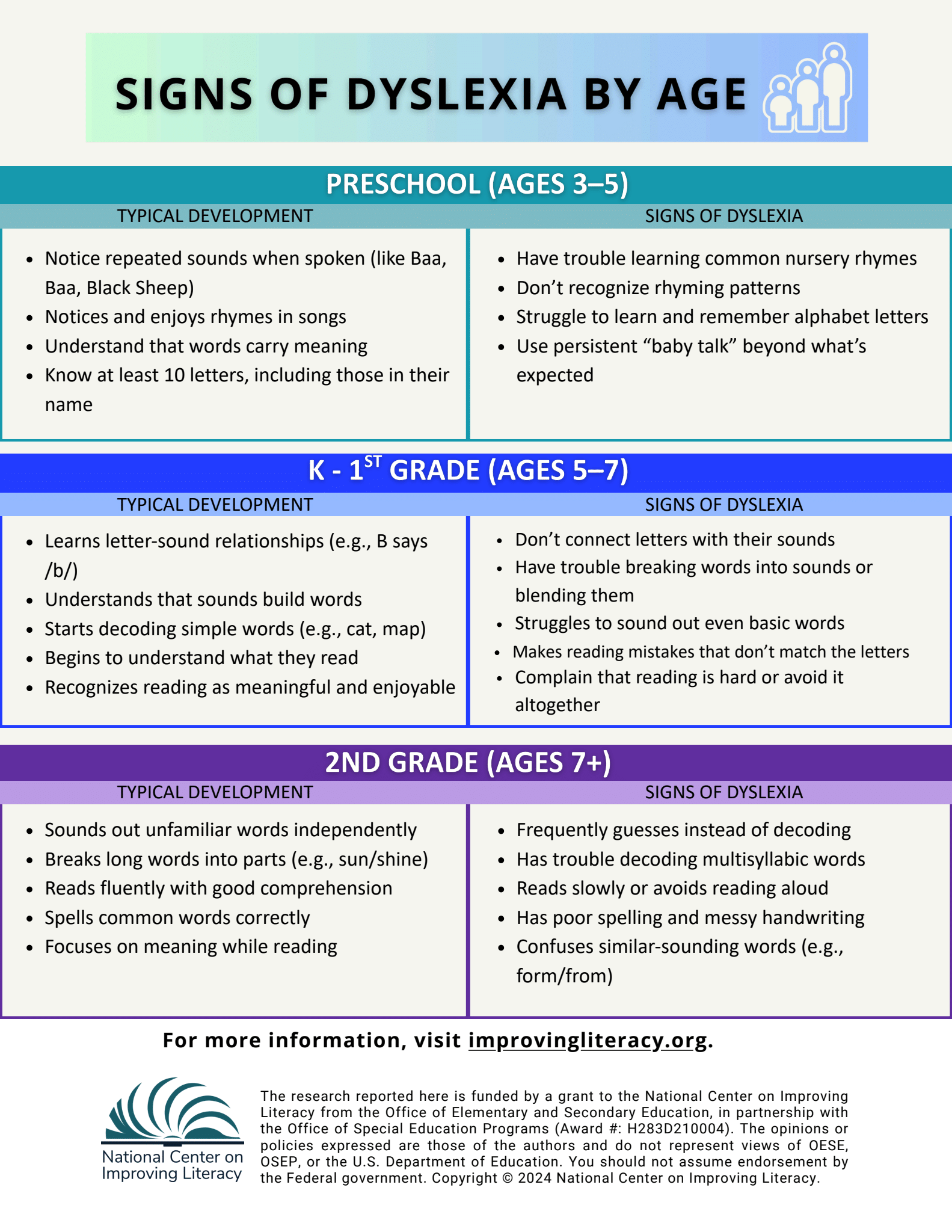
In the preschool years, many children begin developing an awareness of sounds in language and the concept of print. Typical readers at this age often:
- Enjoy playing with sounds and rhymes
- Recognize some letters, especially those in their name
- Begin to understand that printed words carry meaning
Children at risk for dyslexia, on the other hand, may:
- Struggle to learn common nursery rhymes
- Not recognize rhyming patterns
- Have trouble remembering letter names
- Continue to use “baby talk” well past toddlerhood
These early difficulties can point to challenges with phonological awareness—an early warning sign of reading difficulties
Kindergarten to 1st Grade
Age: 5-7
As children move into kindergarten and first grade, they typically learn how letters map to sounds and begin to read simple words. Most readers at this stage:
- Understand letter-sound relationships
- Can decode regular one-syllable words like cat, map, or pan
- Begin to comprehend what they read
Children at risk for dyslexia may show a different pattern. They might:
- Not connect letters with sounds
- Make reading mistakes that don’t match the letters on the page
- Struggle to break words into sounds
- Avoid reading or express frustration
These challenges often suggest difficulties in phonics and decoding—core components of early reading.
2nd Grade and Beyond
Age: 7+
By second grade and up, most children begin to read more fluently and focus on understanding longer texts. Typically developing readers:
- Use letter-sound knowledge to read unfamiliar words
- Decode longer, multisyllabic words using word parts
- Read with enough fluency to focus on comprehension
Children at risk for dyslexia may:
- Continue to struggle with decoding
- Read slowly or guess at words
- Confuse similar-sounding words
- Avoid reading aloud
- Show persistent difficulties with spelling and handwriting
At this stage, reading difficulties become more pronounced and can affect a child’s confidence and academic performance if not addressed.