
For some students, challenges with reading or language may happen alongside feelings like worry, sadness, or low confidence. Understanding how these areas connect can help schools and families provide better support.
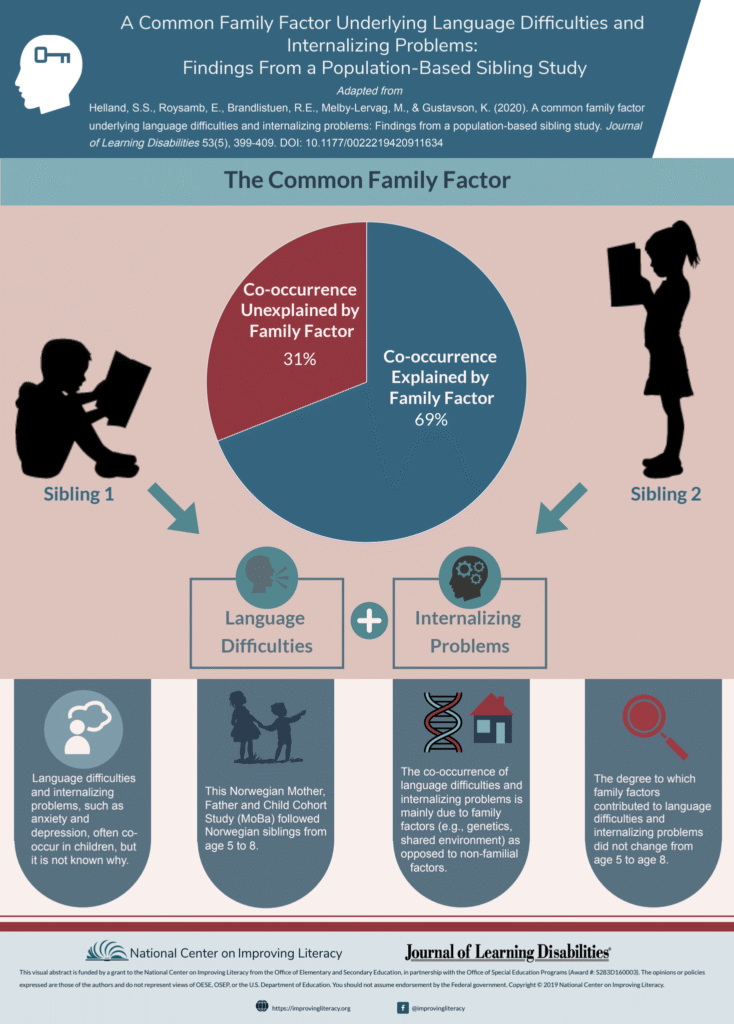
Research in child development, language development, and mental health in children shows that these challenges are often linked. Instead of happening by chance, they may share common causes. A 2020 study in the Journal of Learning Disabilities by Helland and colleagues found that language difficulties and mental health challenges, such as anxiety and depression, often occur together. A large part of this connection can be explained by shared family factors, including genetics and home environment.
This does not mean that a child’s future is fixed. Instead, it helps explain why some students may need support in more than one area. For example, a child who struggles with language may also feel frustrated or anxious in school. Over time, this can affect confidence, participation, and overall learning. Recognizing these connections allows educators to take a more complete approach to support.
Early identification is key. When schools use early screening, language assessments, and social and emotional screening tools, they can better understand a child’s needs. This leads to more effective intervention strategies that address both academic and emotional development. For example, a child may benefit from targeted language instruction along with support for emotional regulation and confidence building.
Family involvement is also critical. Since family factors play a strong role, working closely with families can make a real difference. When schools and families share information and strategies, children receive more consistent support across settings. This partnership can help strengthen both language skills and emotional well-being.
It is also important for educators to avoid viewing challenges in isolation. A child is not just a reading score or a behavior rating. Each student has a unique set of strengths and needs. By using a whole-child approach, schools can better understand how different areas of development interact and influence each other.
In today’s classrooms, combining evidence-based literacy practices with attention to social and emotional needs leads to stronger outcomes. When schools consider both language and mental health, they can create a more supportive environment where every child has the opportunity to grow, learn, and succeed.