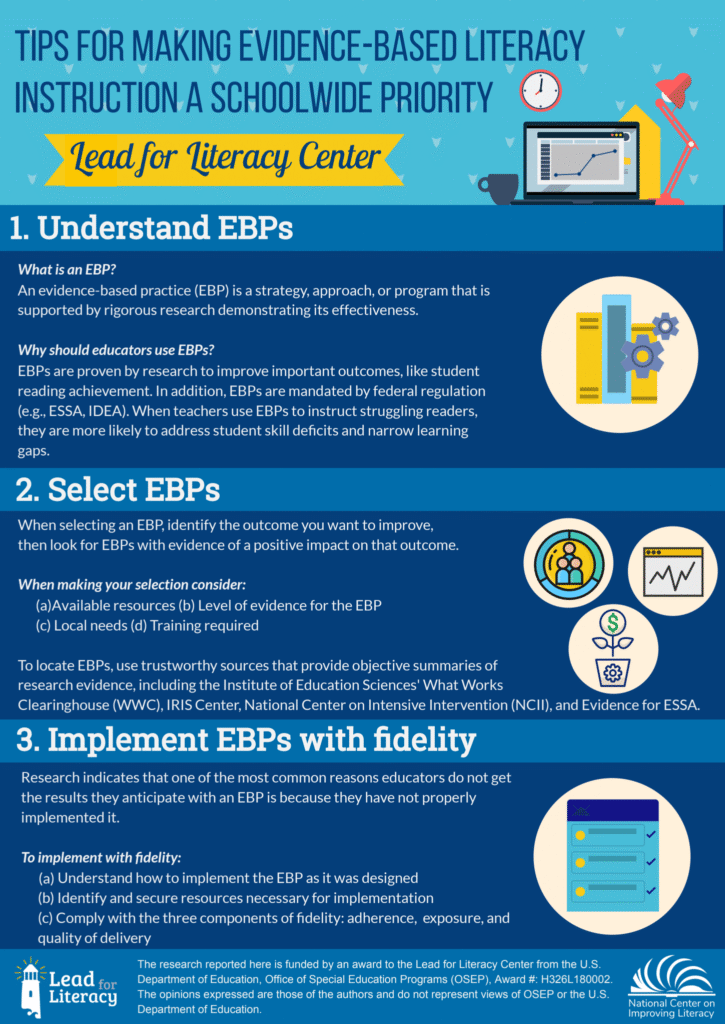

Evidence-based literacy instruction plays an important role in improving reading outcomes for students. Evidence-based practices (EBPs) are instructional approaches or programs supported by strong research demonstrating positive effects on student learning. Federal laws such as ESSA and IDEA also encourage the use of research-supported instruction to help schools provide effective literacy support for all students.
Selecting the right instructional practices requires careful planning and consideration. Schools and educators should think about the specific literacy skills they hope to improve, while also considering factors such as staff capacity, professional learning needs, available resources, and the strength of the supporting research. Trusted organizations such as the What Works Clearinghouse, IRIS Center, National Center on Intensive Intervention, and Evidence for ESSA can help educators review and evaluate research evidence when making decisions about literacy programs and interventions.
Strong instructional practices alone are not always enough to improve student outcomes. Implementation fidelity, or how closely a practice is delivered as intended, is also critical. When educators receive proper training, have access to instructional materials and supports, and provide students with enough instructional time, evidence-based practices are more likely to produce positive results.
Implementation fidelity includes several important components. Educators should follow instructional procedures consistently, provide sufficient exposure to instruction and intervention, and deliver instruction effectively. These elements help ensure that students receive the full benefit of the instructional approach being used.
Improving literacy outcomes requires both strong evidence-based instruction and consistent implementation across classrooms and intervention settings. When schools thoughtfully select instructional practices and support educators in delivering them effectively, students are more likely to receive the high-quality literacy instruction they need to become successful readers.