For many students, this process develops with practice and strong instruction. But for some children, especially those with dyslexia, the brain processes reading in a different way. Understanding this difference can help schools provide better support and improve reading success.
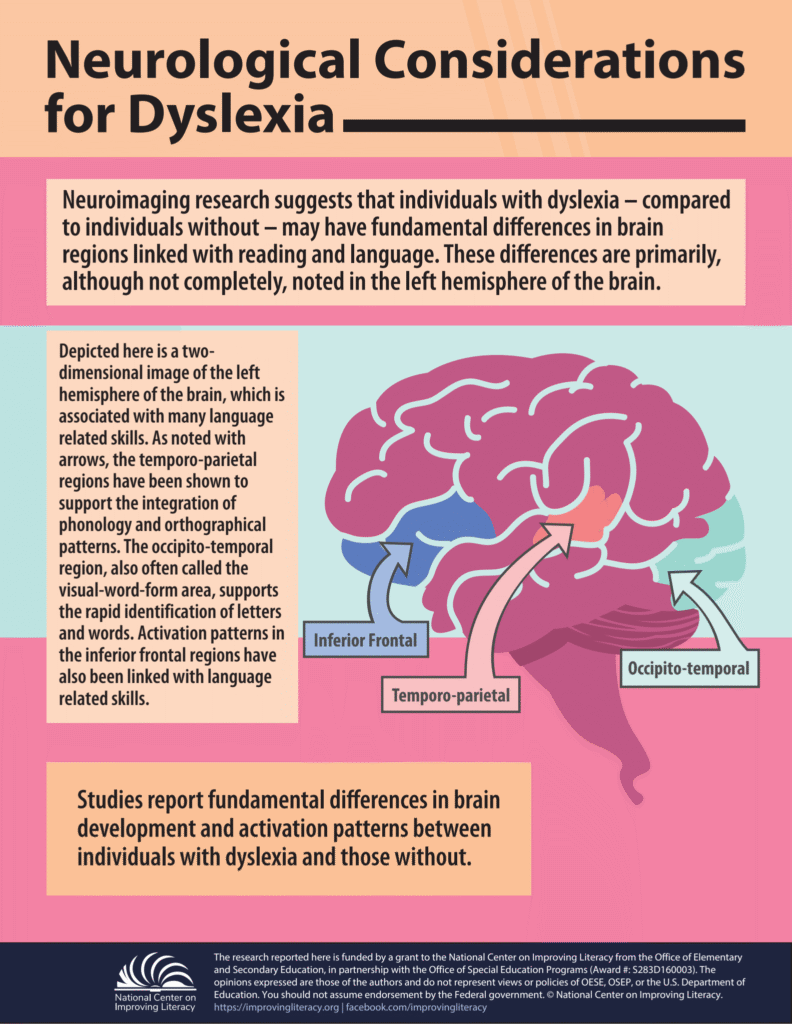
Dyslexia is not caused by a lack of effort or intelligence. It is a neurobiological condition, which means it is linked to how the brain is built and how it works. Research in brain imaging and cognitive science has shown that students with dyslexia may use different parts of the brain when they read. Certain brain regions play key roles in reading, including areas that help connect sounds to letters, recognize words quickly, and support language processing. When these areas do not work together efficiently, reading can become slow and difficult.
This understanding is important because it changes how we think about reading instruction. Instead of seeing reading struggles as a simple delay, educators can recognize the need for structured literacy, explicit phonics instruction, and targeted intervention. These approaches are designed to match how the brain learns to read, especially for students who need more support.
Early identification is also critical. When schools use early screening for dyslexia and monitor student progress, they can spot signs of reading difficulty sooner. This allows teachers to provide help before frustration builds and gaps grow larger. The earlier the support begins, the better the outcomes for the child.
It is also important to remember that students with dyslexia often have many strengths. They may be strong in problem-solving, creativity, or oral language. With the right instruction and support, they can become successful readers and confident learners.
Families and educators both play a role in this process. When schools share clear information and work closely with families, students receive consistent support both at school and at home. This teamwork helps build confidence and keeps progress moving forward.
In today’s classrooms, using practices based on the Science of Reading and understanding the brain basis of dyslexia can make a lasting difference. By focusing on how reading develops in the brain, schools can provide more effective instruction and give every child the opportunity to succeed.