For many students, success in reading is closely tied to oral language development, vocabulary growth, and background knowledge. These skills support everything from recognizing words to understanding complex texts. When instruction connects to a child’s language and experiences, it becomes more meaningful and easier to understand. This is especially important in early literacy instruction, where strong foundations can shape long-term reading success.
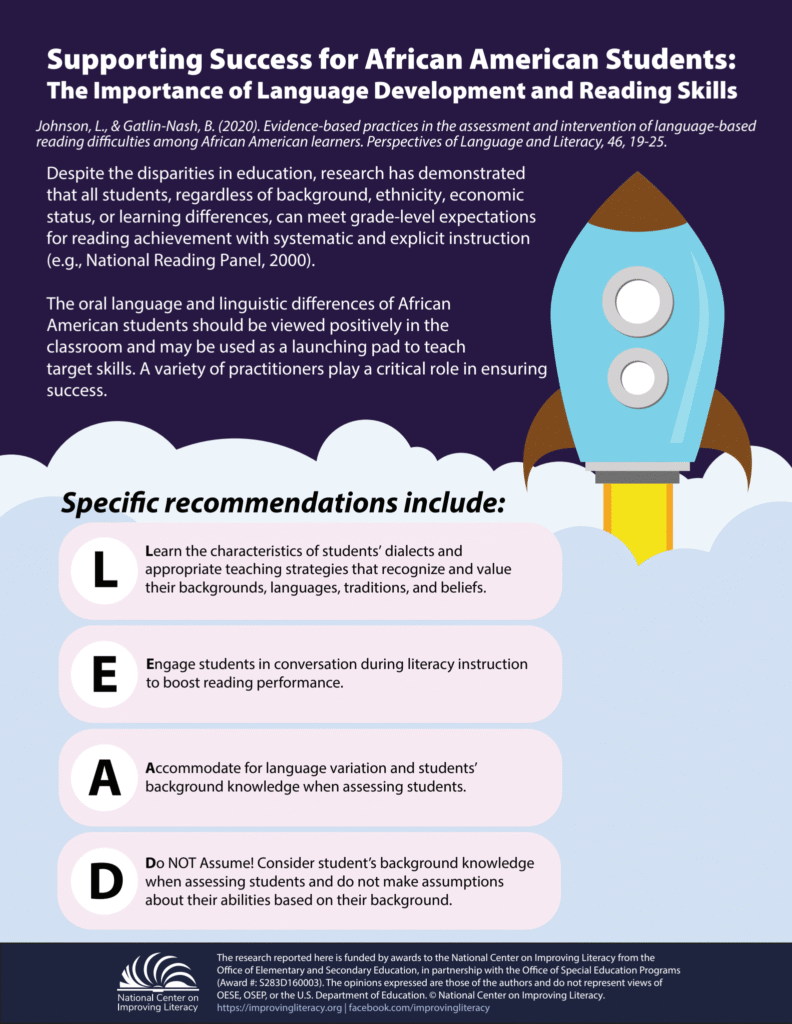
Research shows that all students can reach grade-level reading expectations when they receive systematic and explicit instruction. A 2020 study in Perspectives on Language and Literacy by Johnson and Gatlin-Nash found that effective teaching practices can support strong reading outcomes across different student groups. These findings mean that high-quality instruction, paired with an understanding of language and culture, can help close gaps and improve achievement.
It is also important for educators to use teaching and assessment practices that reflect students’ backgrounds, languages, traditions, and beliefs. Standard reading assessments may not always reflect a child’s full abilities, especially if they do not account for language variation or background knowledge. By using multiple sources of data and considering the whole child, teachers can make more accurate and supportive decisions.
Engagement is another key factor. When students are encouraged to talk, share ideas, and connect learning to their own experiences, they become more active participants in reading. This kind of interaction supports both language development and reading comprehension. It also helps build confidence and a sense of belonging in the classroom.
Families and communities play an important role as well. When schools build strong partnerships with families, they can better understand each child’s strengths and provide more consistent support. This teamwork helps reinforce learning both at school and at home.
In today’s classrooms, supporting reading success means more than teaching skills. It means understanding students as individuals. By combining evidence-based literacy practices with respect for language and culture, schools can create learning environments where every child has the opportunity to grow, succeed, and thrive in reading.