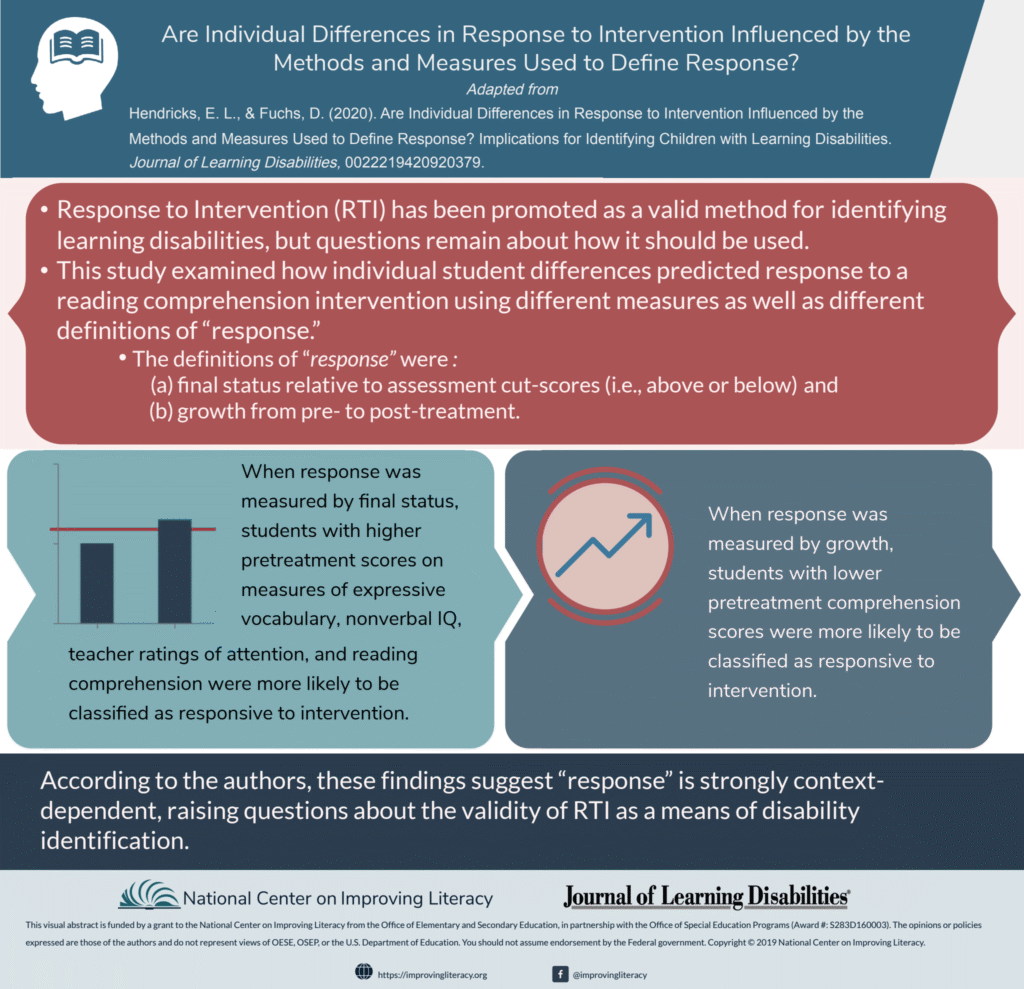

Many schools use a system called Response to Intervention (RTI) to answer these questions. RTI is designed to provide support in steps, starting with strong classroom instruction and adding more help when needed. It also uses progress monitoring and data-based decision-making to track how students are improving over time. This approach is widely used in early literacy instruction and reading intervention, especially for identifying students who may be at risk for learning disabilities.
A 2020 study in the Journal of Learning Disabilities by Hendricks and Fuchs found that not all students show progress the same way, and how schools measure that progress can change which students get support. A student might show steady improvement but still fall below grade-level expectations, or reach a benchmark score while making only small gains over time. This means that the tools and methods used in assessment matter just as much as the instruction itself.
This idea is especially important when working with students who struggle with reading comprehension or other literacy skills. Factors like vocabulary, attention, and prior knowledge can all affect how a child responds to instruction. Because of this, schools need to look at the full picture—not just one score or one test. Using multiple data points, such as reading assessments, growth data, and teacher observations, can lead to more accurate and fair decisions.
It is also important for educators to stay flexible. When a student is not making expected progress, it does not mean the child cannot learn. It may mean the instruction needs to change. High-quality systems focus on adjusting teaching methods, increasing support, and giving students more opportunities to succeed.
Families are key partners in this process. Clear communication about student progress helps families understand what is working and how they can support reading at home. When schools and families work together, students benefit from consistent support. In today’s classrooms, using evidence-based practices, strong assessment tools, and thoughtful decision-making can improve outcomes for all students. By understanding how progress is measured and responding in flexible ways, schools can better support each child’s reading journey and long-term success.